
A public notebook of making and wandering curiosities.
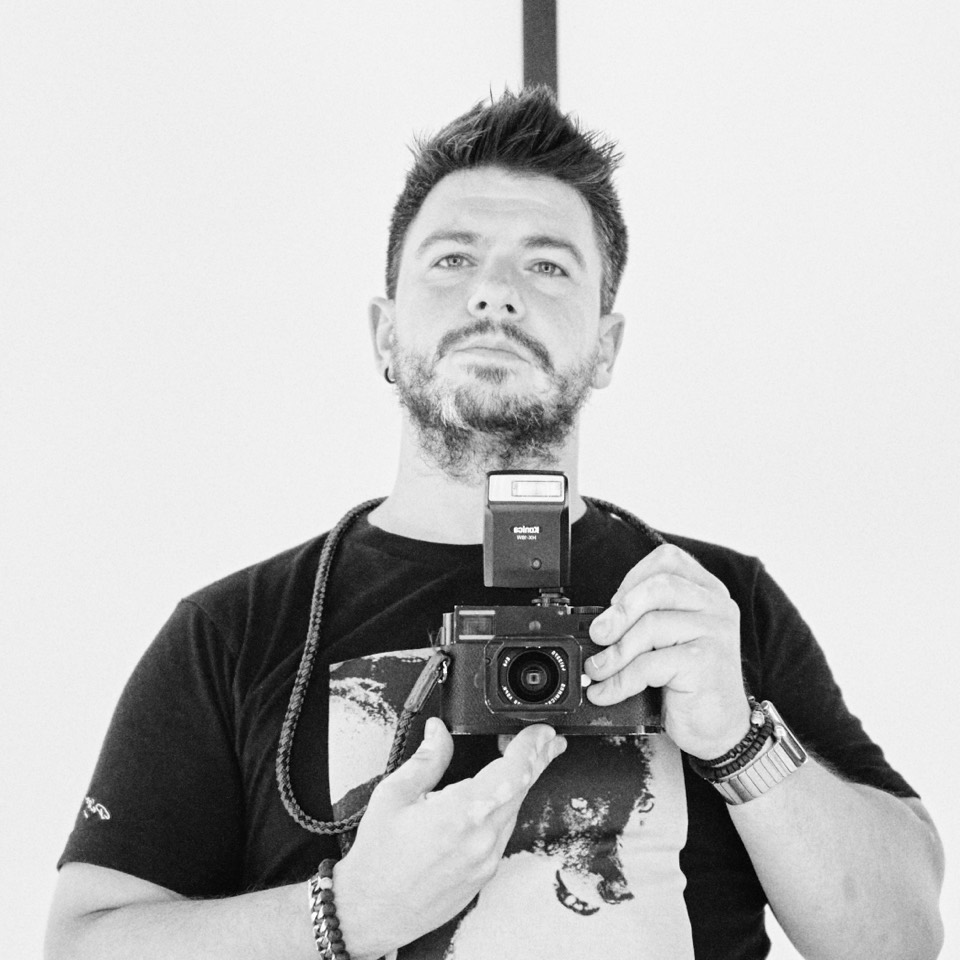
I’m Toto , a photographer, bookbinder, walker, human-computer interface researcher, and a small gallery curator, among other smaller things.
I like making things. I enjoy writing software and working with paper, photographs, and things that need to be cut, glued, or held together. Making books gives me reasons to learn bookbinding. Working in the darkroom gives me ideas for tools. One thing usually leads to another.
Walking is where a lot of this begins. I do much of my thinking on long walks, usually with a camera in hand.
This site is my public notebook. I write about what I’m making and share things I find useful or interesting along the way. If something here starts a conversation or gives you an idea for something of your own, I’d be happy about that.
My photography-only alter ego has a separate home at toto.photo.
On this page: Newsletter · Record · Philosophy · Extended about · Tools I use · AI · Get in touch
Newsletter
The Flâneur is my newsletter: projects, photography, books, and walking, a little more private and a little more drifting than the site. New readers can start with the essay, the method, or the story so far.
16 dispatches since 2021 · seasonal, not monthly · one click to leave
Record
Books
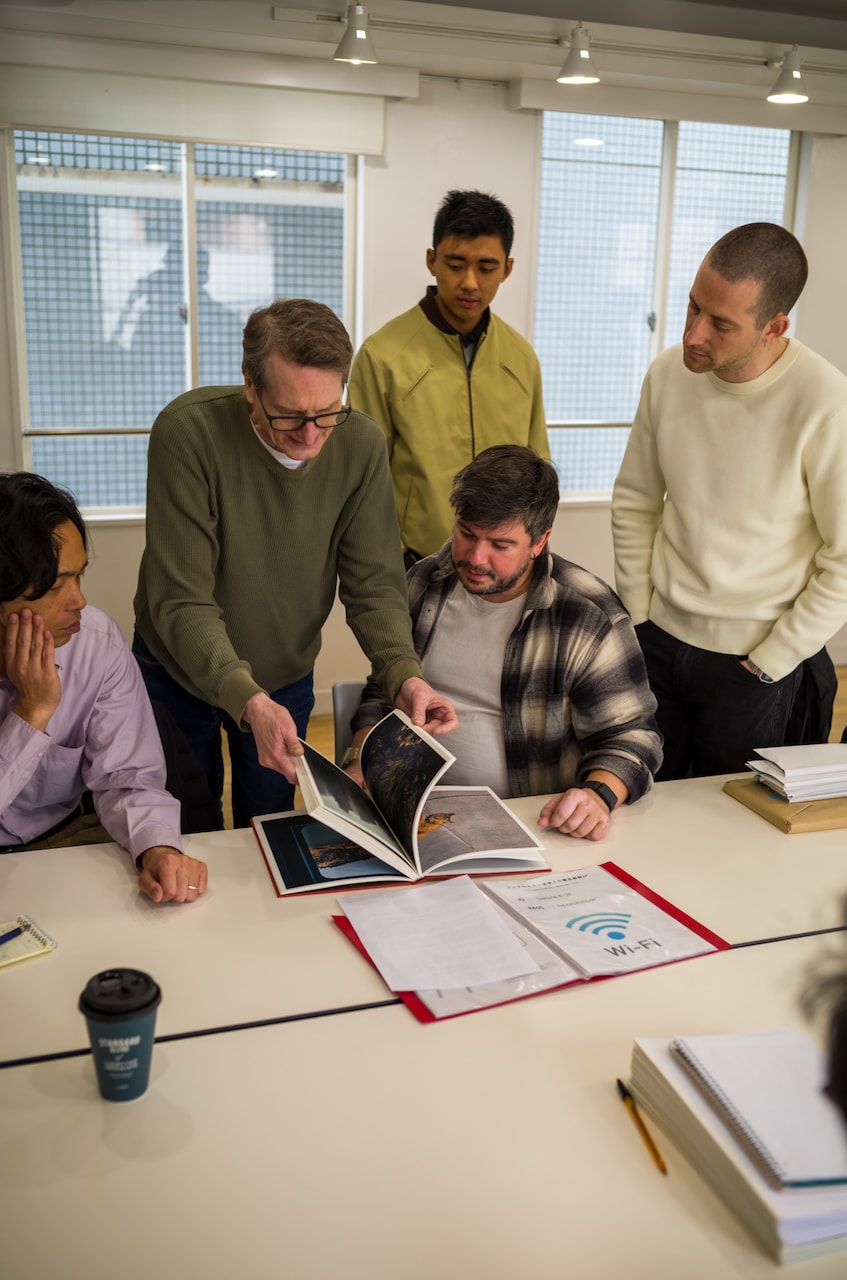
- Scent of Time · photobook maquette about how we perceive time, developed in the FotoFilmic Book Program with Greg Girard. Shown at FotoFilmic Paris during Paris Photo week, November 2026.
- Out of Memory, Vol. 1–11 · a 200-page volume every six to eight months, hopefully until my last day
- Seven maquettes · Catch-32, Someone at the Door, Synesthesia, A Chair in the Sky, and others
Exhibitions
- FotoFilmic Book Program 2025–26: Paris · FotoFilmic Paris, Paris Photo week
- Wirescapes: Connected With the Urban Fabric (Reprise) · Mutant Radio, Tbilisi, duo
- FotoFilmic Book Program 2025–26: Bowen Island · FotoFilmic Space, British Columbia
- Tokyo Flâneur Vol. 2: The Moments I Stood Still · Jinny Street Gallery, group
- Tokyo Flâneur: Through the Eyes of a Stroller · Jinny Street Gallery, group
- Wirescapes: Connected With the Urban Fabric · UNTITLED SPACE, Tokyo, duo
- Synesthesia · Verinuqué Aoyama, Tokyo, solo event
- Walk With Me · the streetlamps of Jingumae 2-chome, Tokyo, solo. The show that became the gallery.
- Perspectives · Gallery Ether, Tokyo, group
Curation
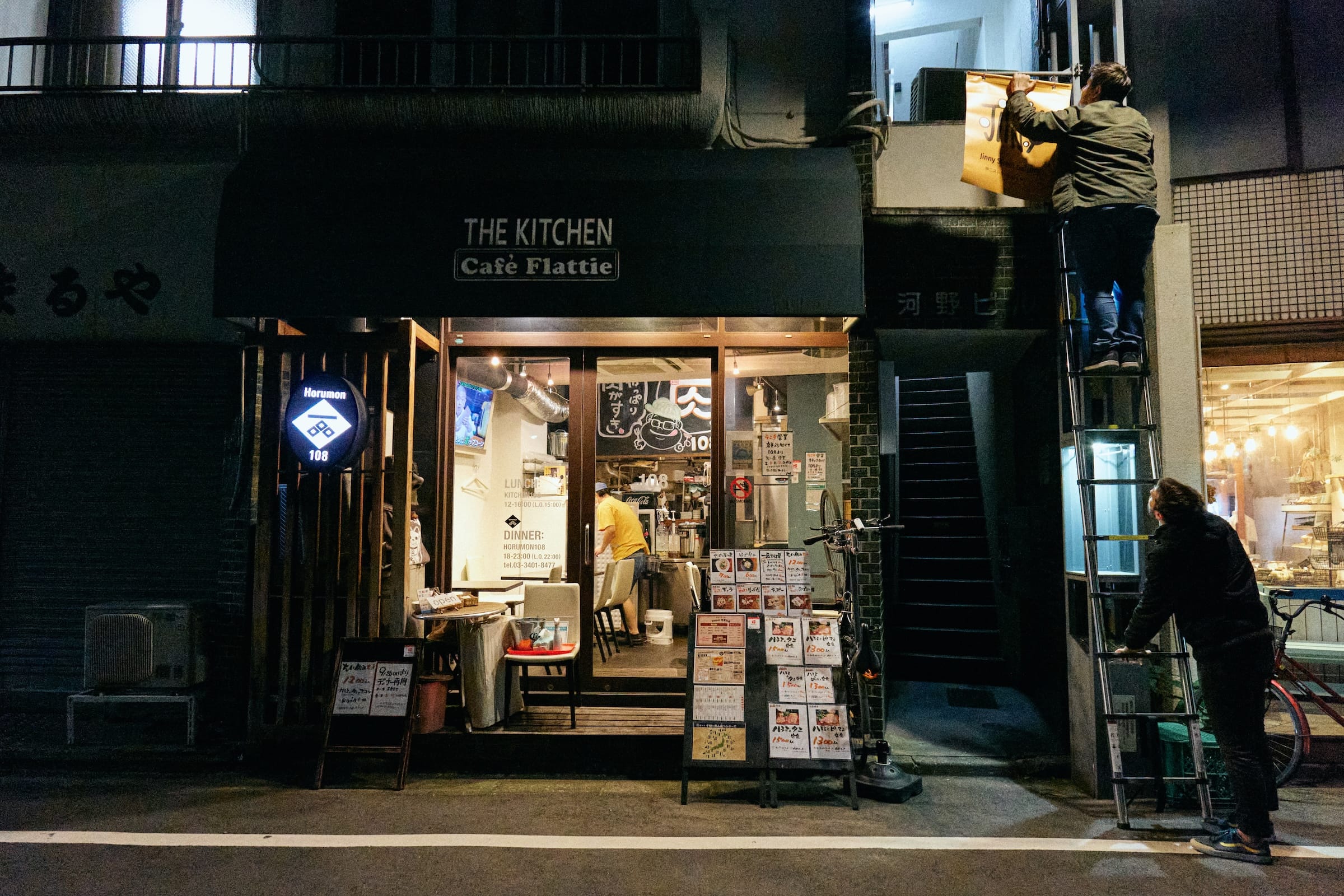
Jinny Street Gallery, co-founded with Lorenzo Menghi in January 2023: forty-two streetlamps with display cases across Jingumae 2-chome, more than thirty exhibitions so far, a magazine, and artist walks. NHK World filmed it in 2023.
Programs and training
- FotoFilmic Book Program · directed by Greg Girard, with Michael Kominek and Gonzalo Sanchez
- Year-long bookbinding course · Marumizu-gumi, Tokyo. A Chair in the Sky was in the 2025 exhibition.
- Everything else, self-taught · software and photography alike
Speaking
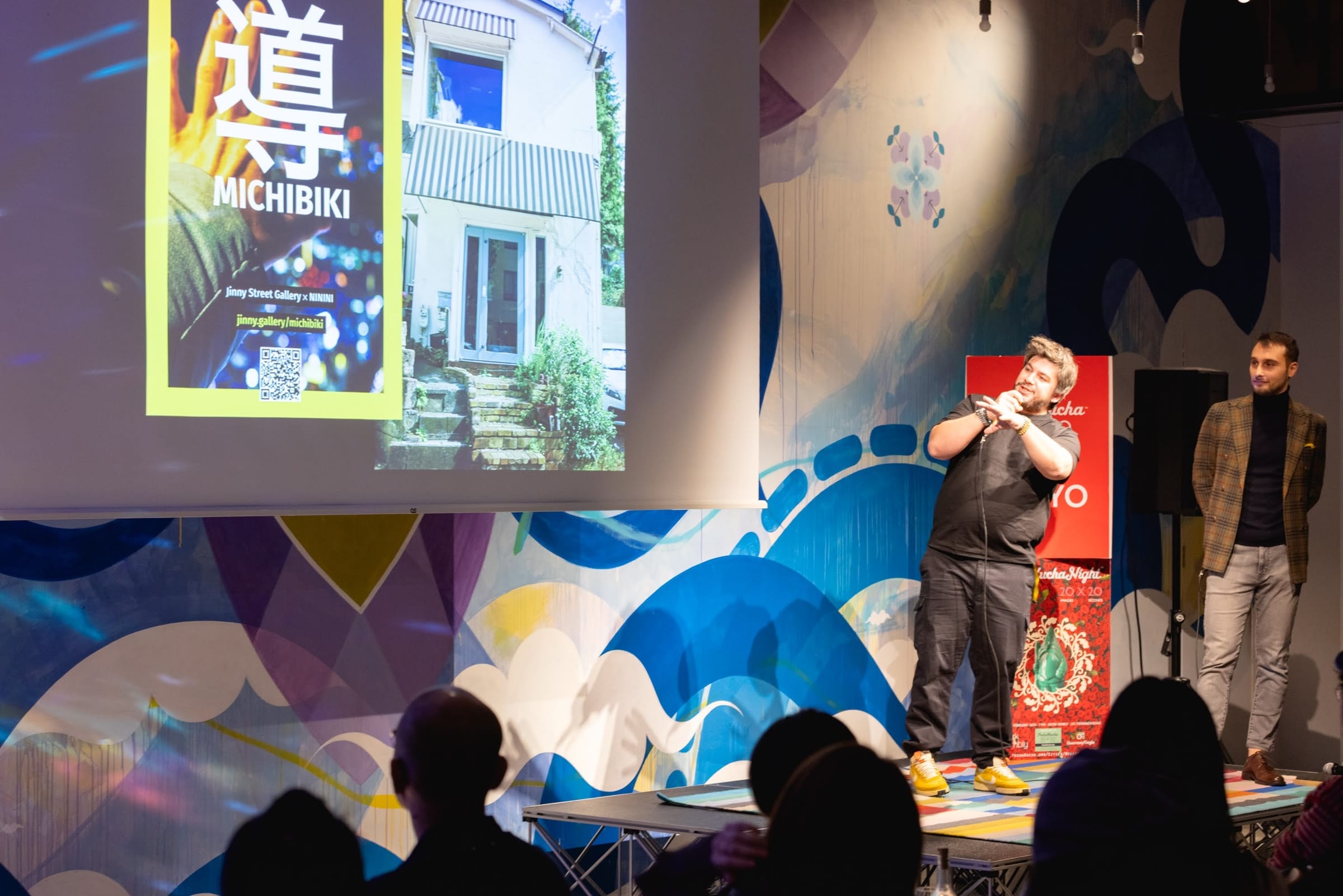
- Light Posts of Jinny Street Gallery · PechaKucha Night Tokyo, Vol. 186
Video
- Creative Curation: Breathing New Life into Tokyo’s Streets · NHK World · archival link
- Voice of Tokyo, Episode 5: Jinny Street Gallery · Tokyo Weekender
- Three Photographs from Tskaltubo, Georgia · Atlas of Ruins, Vol. 1, STH Press, Italy
- Cover and interview on Jinny Street Gallery, with Lorenzo Menghi · andJ, Jingumae neighborhood magazine · archival link
- Wirescapes: connected with the urban fabric · ADF Magazine, exhibition report by Matteo Belfiore
- Lone Man, 2019 · ARTcollectors’ アートコレクターズ Magazine, Issue 156
Tools I made
Toolmaking is the software half of the practice: command-line tools and Obsidian plugins for people who keep their notes in plain files, built to work for a person at a keyboard and for an agent alike. All of it lives under Project Humane, with Plaintext Commons as the stance.
Philosophy
Three principles I try to live by and build into everything I make.
Follow Irrational Thoughts
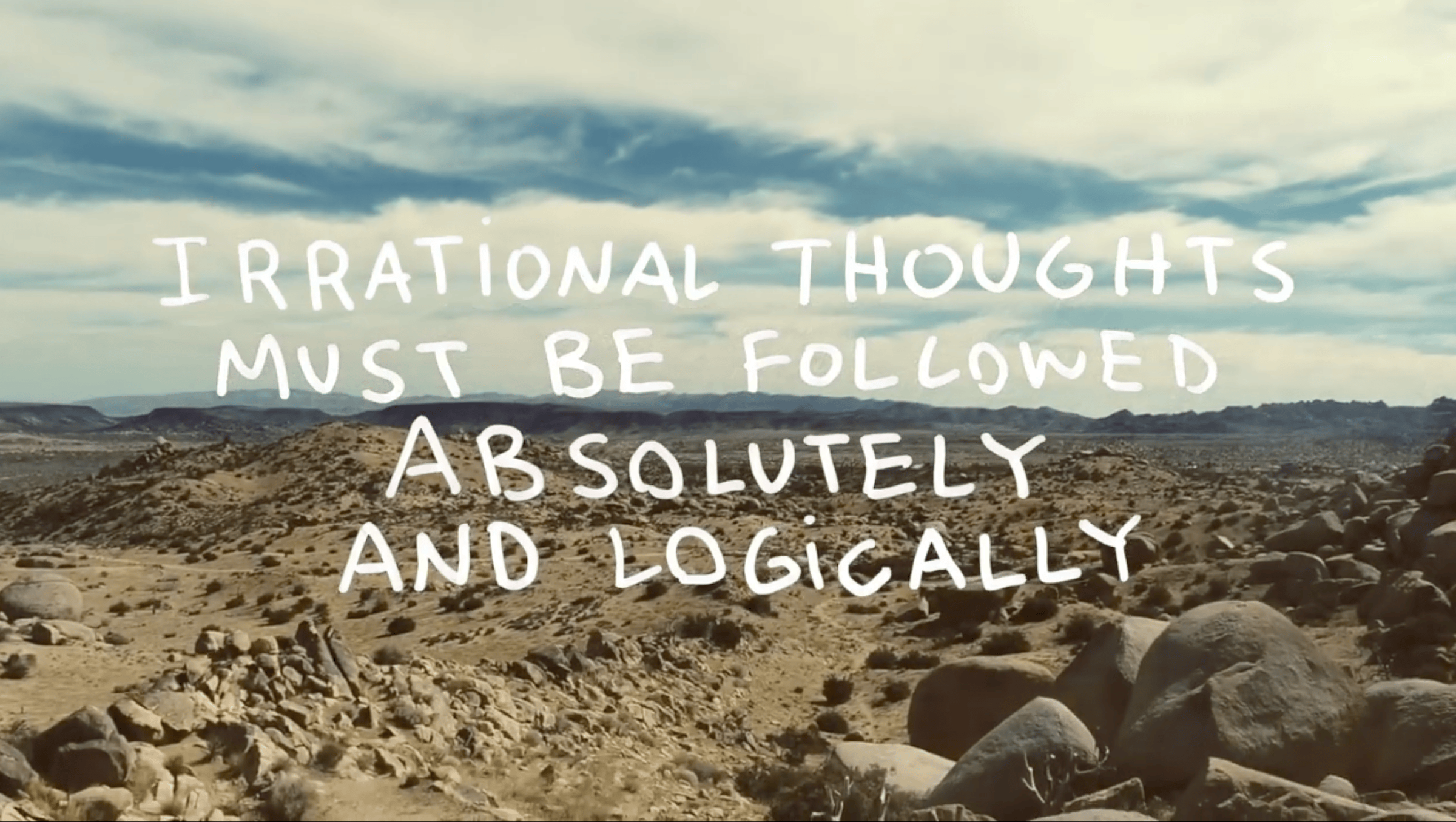
We are mystics, not rationalists. Art, like marathon running, is an irrational, useless endeavor. But we expend the enormous energy art demands anyway. Because through our efforts, we expand our threshold for the human spirit. This is what distinguishes us from the cows in the field.
— Tom Sachs, Paradox Bullets, on Sol LeWitt’s quote
Made for Humans
Hands are extraordinary, and their ingenuity is among the clearest markers of what it means to be human. They sculpt, write, design, build; they are the conduits through which imagination becomes form. Yet modern technology has largely relegated them to repetitive tapping on glass, an interface that betrays their potential. Design tools and systems with the human body in mind: tools that respond to the complexity of touch, motion, and thought.
Local First
Every project has a landscape, and that landscape is local. For a decade it was the neighborhood around Jinny Street Gallery and a print shop that smelled of ink, a short walk from home in Tokyo. Now that landscape is Monteverde, Rome. Build here, now, with people whose eyes you can see. The result is work that carries the texture of a place, the unmistakable scent of belonging.
Extended About
I was born in Tbilisi in 1988 and moved to Japan in December 2014, first to Kanazawa and then to Tokyo. I’m now in the middle of moving to Rome. Toto is short for Tornike, a name only my passport uses.
For almost two decades I wrote software for a living, mostly for Apple devices. I learned it without a degree in anything, and I still write code most days. I enjoy making tools I can use myself, then sharing them with people who might have the same need. Project Humane is the name I use for much of that work, from software to the Unbound Notebook System and experiments with physical interfaces. I’m interested in how a tool feels to use and where its design helps or gets in the way.
Walking became a habit in my late teens. Whenever I felt bad, I would go out without a destination and keep going until it felt right. Eventually I started doing it on good days, too. I don’t wear headphones. I like having those hours available to whatever I notice or think about. Twenty kilometers is a normal way to think.
Since 2017, a camera has come along on every walk. The photographs became a record of what my attention kept returning to, and together with a daily written journal, grew into Out of Memory. I’ve been printing it in 200-page volumes since 2019 and hope to continue for the rest of my life.
I use those photographs to make other books. Scent of Time, developed with Greg Girard, explores how we experience and remember time. I’m drawn to sequences that leave something unresolved, giving the person looking at them room to bring their own memories. Making the books by hand lets me work on that experience through paper, folds, binding, and the simple act of turning a page.
With my friend Lorenzo Menghi, I also run Jinny Street Gallery in Tokyo. We founded it in January 2023, using the display cases built into forty-two streetlamps around Jingumae 2-chome. To see an exhibition, you walk through the neighborhood. You can also happen upon one while buying groceries, which is part of what I like about it.
In 2024, I built a darkroom and bookmaking studio in Kyojima, Tokyo. It became the production space for the books, prints, and experiments until August 2026, when four hundred kilograms of it left for Italy in seventeen parcels. Minutes before packing, I scanned the room. It now survives on this site as Kyojima Studio, 2024–2026, with considerably lower rent.
In June 2026, I married Ludo in Rome. We share a studio in Monteverde, called Project Humane or Studio Humane depending on the weather. The worktable is new and the boxes are still arriving. Tokyo is home for a little longer. Tbilisi is where my roots are, and my escape hatch from Rome.
Tools I use
People ask, so here is the kit. The rule is two bodies with two lenses over one body with seven: a lens stays mounted, and the pairing is the unit. Nothing here is sponsored.
Cameras. Leica M11-P, the primary body. Leica Q3 43, the fixed-lens pairing. A Panasonic Lumix S5 for utility and scanning. Two Konica Big Mini F for the family rolls, 80–100 a year.
Out of Memory. Contax G2, mostly with the G 28mm f/2.8 or the G 35mm f/2; I own all of the G lenses, because it makes me feel good. Ricoh GR IV Monochrome, my fourth GR. A Teenage Engineering TP-7 for voice notes and an Unbound notebook. Earlier volumes were shot on a Sony RX100 VII, a Leica M-D, a Leica Q2 Monochrom, and many Ricoh GR IIIs.
Lenses. Summilux-M 50mm f/1.4 ASPH, the close-focus version, and Summilux-M 35mm f/1.4 ASPH FLE.
Film. HP5 Plus for black and white. Portra or Ultramax for color.
Darkroom. A JOBO rotary processor with the four-probe thermometer panel I built for it. Replenished C-41 mixed from minilab concentrates. RA-4 color prints.
Scanning. LPL DS-4 copy stand with a Leica Bellows-R, and the VNS adapter with Apo-Rodagon optics over a Valoi easy120 carrier. Negative Lab Pro for conversions. Two minutes a roll. A Valoi easy35 for travel, black and white only.
Desk. MacBook Pro and an Apple Studio Display. A Mac mini that never sleeps, running the home server and the assistant. The plainest iPhone on sale. A Stream Deck, mostly for Refmode.
Paper. The Unbound Notebook System, loose leaves in covers I make myself. A3 kraft paper and a Sharpie for ideation.
Software. Obsidian, with Arrowhead underneath it. Things for tasks, Day One for the daily digital journal I’ve kept since 2019. Capture One for photographs. InDesign for books, Fusion 360 for parts. Claude Code and Codex for code. Hugo for this site.
Carry. Freitag F05 Blair for money, several F35 Cheyenne for stationery, toiletries, and electronics on the go, and F155 Clapton for everything.
Body. Whoop on one wrist, a Casio G-Shock on the other.
How I use AI
Freely in private, never across the border. Anything that reaches you, an email, a note, a photograph, is authored by me. The Human Border is the contract. The AI page is the transparency report, prompt included.
Get in touch
Best way to reach me is via email.
You can follow along through the newsletter, RSS, or Instagram.