
Square sensors make sense for online video
I think square sensors make the most sense for video shared online. We watch so much of it on phones and tablets, turning screens and moving between feeds, full-screen playback, and smaller windows. The same recording needs to work in several shapes.
Cinema already has the right setting: a movie theater, where the screen presents the intended composition. This idea is for video that travels between devices and orientations.
A square sensor, recorded as a square image, gives portrait and landscape equal room. Keep the square master with the author’s instructions for framing it on different screens.
Framing as Metadata
I would like the video to carry suggested crops, points of interest, or both in its metadata. The author would choose what suits the work: compose specific frames, mark a face, object, or action to follow, or combine the two. Either kind of instruction could follow movement and change at cuts.
At playback, the device could use a suggested crop that fits its window or calculate one from the points of interest. An author might supply preferred portrait and landscape compositions, with a point of interest to guide other screen shapes. The author decides how much of the framing to specify and how much to leave to the player.
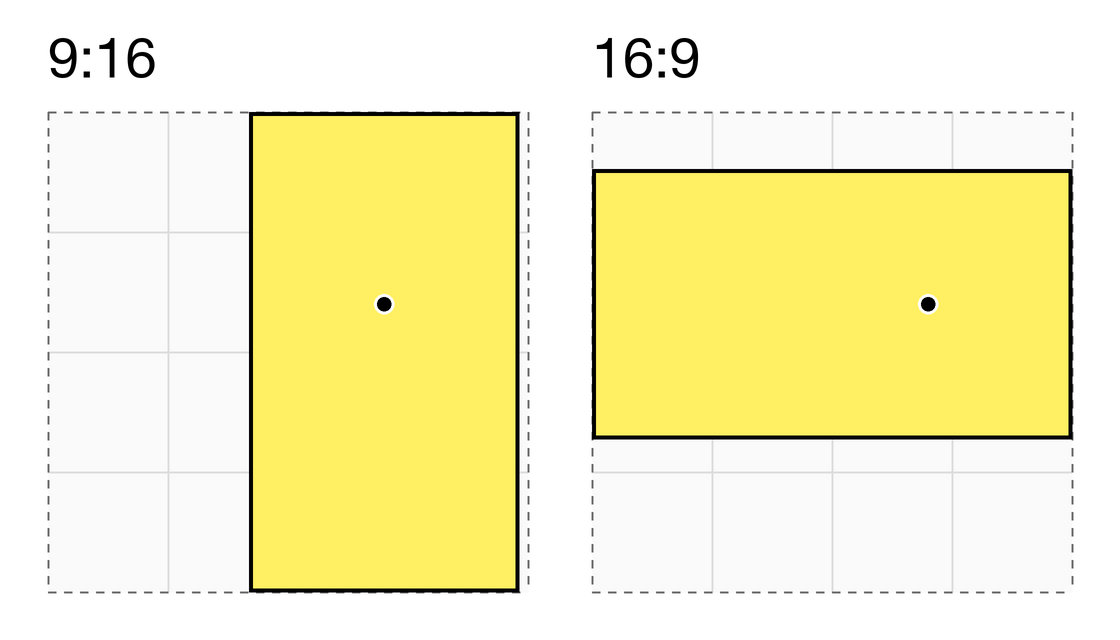
Several important subjects might not fit one crop. The player could preserve the full frame with borders in that case. Some shots would still need a fixed composition; a point of interest cannot describe every framing decision.
DJI’s Osmo Action 6 already records square video for later cropping. What I want next is a shared way to carry the author’s intent alongside the recording, so video can adapt to mobile screens without losing what it was made to show.