
Stop Saying Russian When You Mean Soviet
I have seen many of my foreign friends use the words Soviet Union, Russia, Soviet, and Russian interchangeably. Moreover, I’ve seen huge publications like Vox mix those terms, which eventually triggered me to write this. Consider this article a friendly explainer of what the Soviet Union means. It is about words and their meanings.
I understand that confusion comes from gaps in cross-cultural knowledge rather than an attempt to diminish someone. However, it is still a false generalization that might easily offend people. If UK culture is somewhat closer to you, imagine how upsetting it would be for Scottish or Irish people to be repeatedly called English only because they all are from the UK.
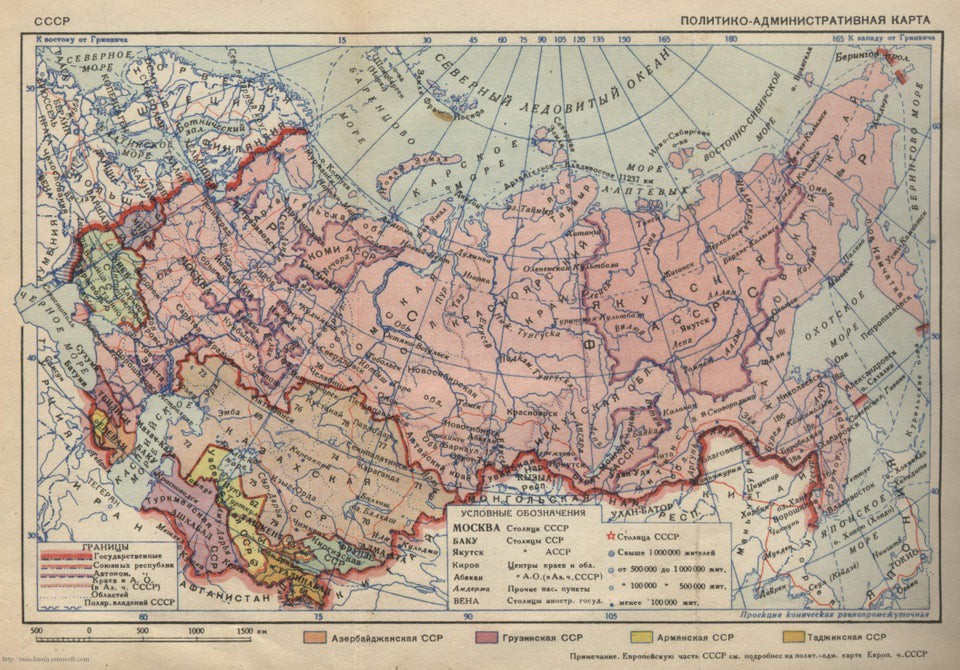
What was the Soviet Union?
The Soviet Union, or, formally, the Union of Soviet Socialist Republics (USSR), was a union of countries. Russia, or, formally, the Russian Soviet Federative Socialist Republic (RSFSR), was just one of them. It gets additionally confusing because Russia is itself a federation. Again, it’s in the name, Russian Soviet Federative Socialist Republic. This is the case even today. The complete name of modern Russia is the Russian Federation. The word federation refers to Russia’s own republics like Chechnya, Dagestan, and Ingushetia. Those are analogous to US states (to some degree, and with much less independence) and were and still are part of the Russia, but not directly USSR.
The republics of the Soviet Union, however, were Armenia, Azerbaijan, Byelorussia, Estonia, Georgia, Kazakhstan, Kirghizia, Latvia, Lithuania, Moldavia, Russia, Tajikistan, Turkmenia, Ukraine, and Uzbekistan. All of them were Soviet republics and members of the USSR, but the other fourteen were not part of Russia.
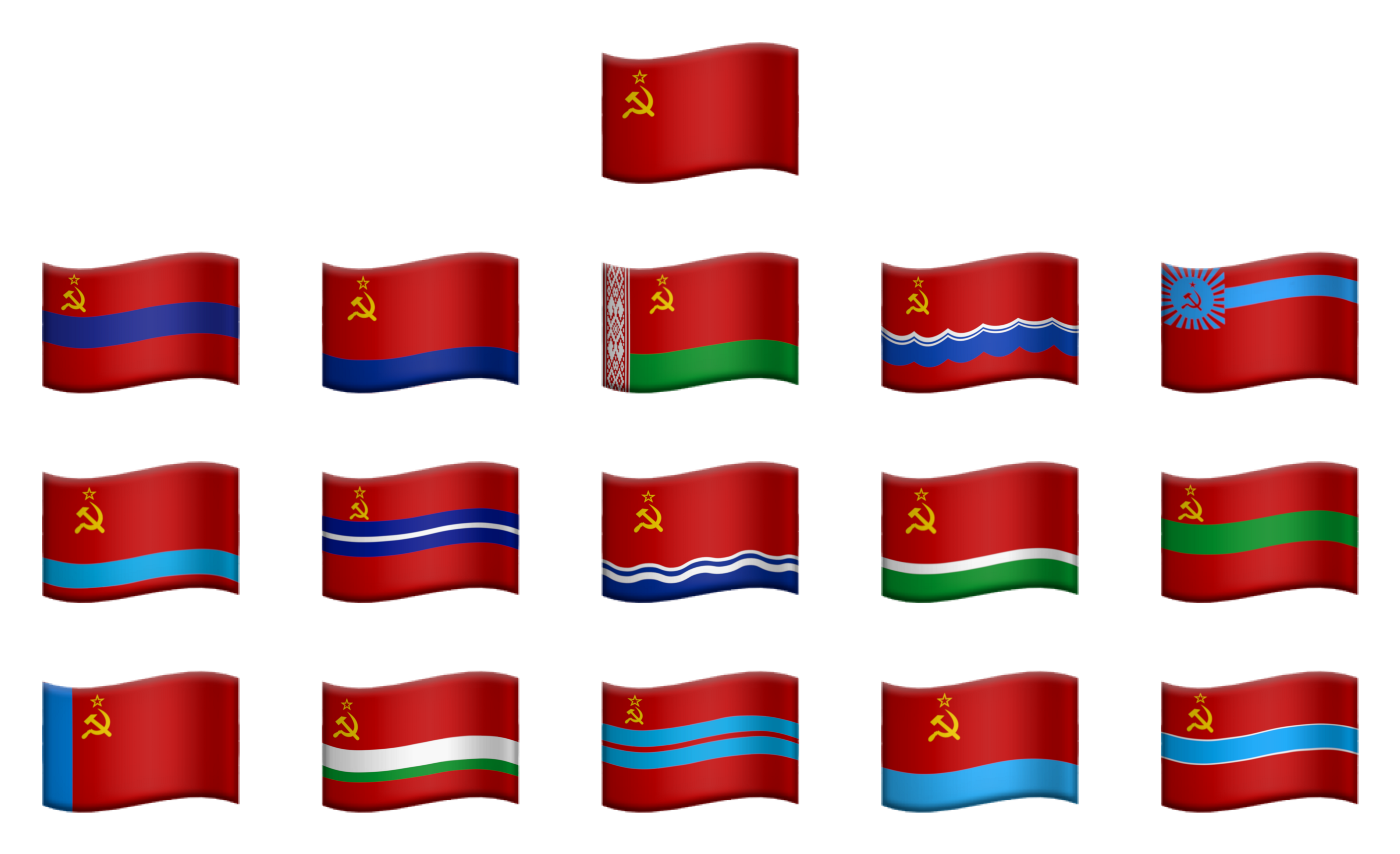
While all countries were equal, some were more equal than others, and only one of them had Moscow in it, so the fact that Russia had the most power of the fifteen is correct.
Now let’s put everything together:
- The word Soviet, when used to refer to the USSR, includes all fifteen nations. Russia is just one of them.
- Those fifteen were legitimate states and nationalities, not ethnicities. You don’t want to dig into ethnicities involved in the USSR; it is a bottomless rabbit hole.
So, the words Soviet and Russian mean different things. The same distinction applies to the terms Soviet Union and Russia.
That’s pretty much it. But, me being Georgian, I’d like you to know a couple of things about the USSR and Georgia too.
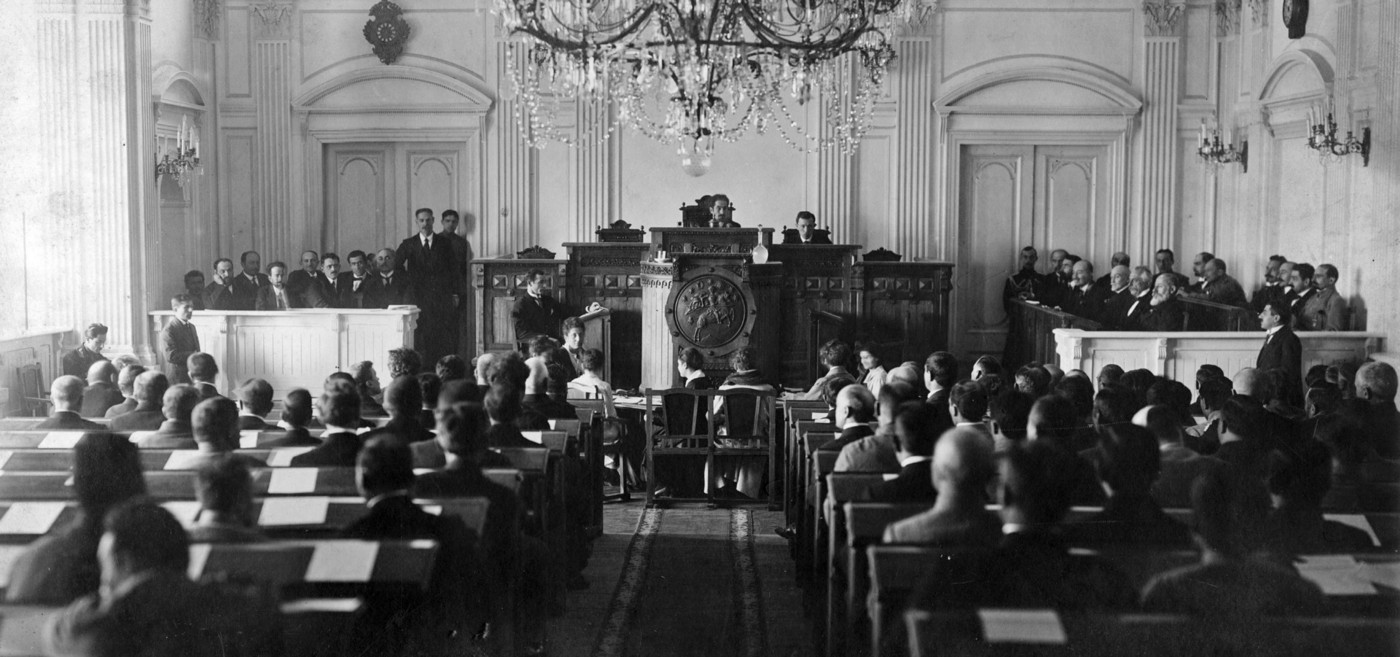
- The formal name of Georgia during the Soviet period was the Georgian Soviet Socialist Republic, or Georgian SSR.
- While some countries joined the USSR somewhat willfully, most were forced to join. Georgia was one of the latter.
- Before the Soviet invasion in 1921, Georgia was a progressive democratic republic. The country had several women in government and equal voting rights for all. Only a handful of countries in 1918 did that, and it took a couple of decades and the consequences of WWII for most of Europe to get there.
- The Georgian language was one of the few in the union that held the status of state language. The rest had their native and Russian as official languages, but Russian was forced on all member states as a primary (some countries even changed their native writing systems to Cyrillic). Moscow tried to replace Georgian with Russian for years, but failed every single time.
- Because of that, today, the Russian language in Georgia is fading fast. I think I’m from the sole transitional generation that is trilingual (Georgian, Russian, and English). The generation born after the collapse of the union barely understands Russian at all.
- English in the USSR was like Japanese is in the West now, exotic, cool, and useless outside of its country. Today, English is the de facto second language in Georgia. While English is not officially recognized, all signs, banners, and even official state forms are bilingual—Georgian and English. I’d say a third of the post-Soviet countries are like that, while others keep Russian as an essential language.
- Georgian language doesn’t look like Russian and does not use Cyrillic. In fact, it doesn’t look like any other language on the planet.