
Jinny Street Gallery Website
Website Exhibition Archive Specifications for artists
I had the design for a new Jinny Street Gallery website in my head for at least two years. I finally had the time to build it. It is now live, in English and Japanese.
Jinny Street Gallery is the gallery I founded with Lorenzo Menghi in Tokyo. Its exhibitions occupy the display cases built into 42 streetlamps across Jingumae 2-chome. Visiting means walking through the neighborhood, finding a case, looking inside, and continuing to the next one. I wanted the website to have some of that same pleasure of discovery.
A Place to Spend Time
The first question was what the website could offer that Instagram could not. Exhibition dates and announcements already had a home there. I wanted to give people a reason to explore, follow their curiosity, and spend a little time with the gallery.
The 3D neighborhood map became the starting point. You can move around it, find the streetlamps, open exhibitions, and take a virtual walk from pole to pole. The neighborhood stays present as you explore the shows, connecting the work to the streets where it was exhibited.
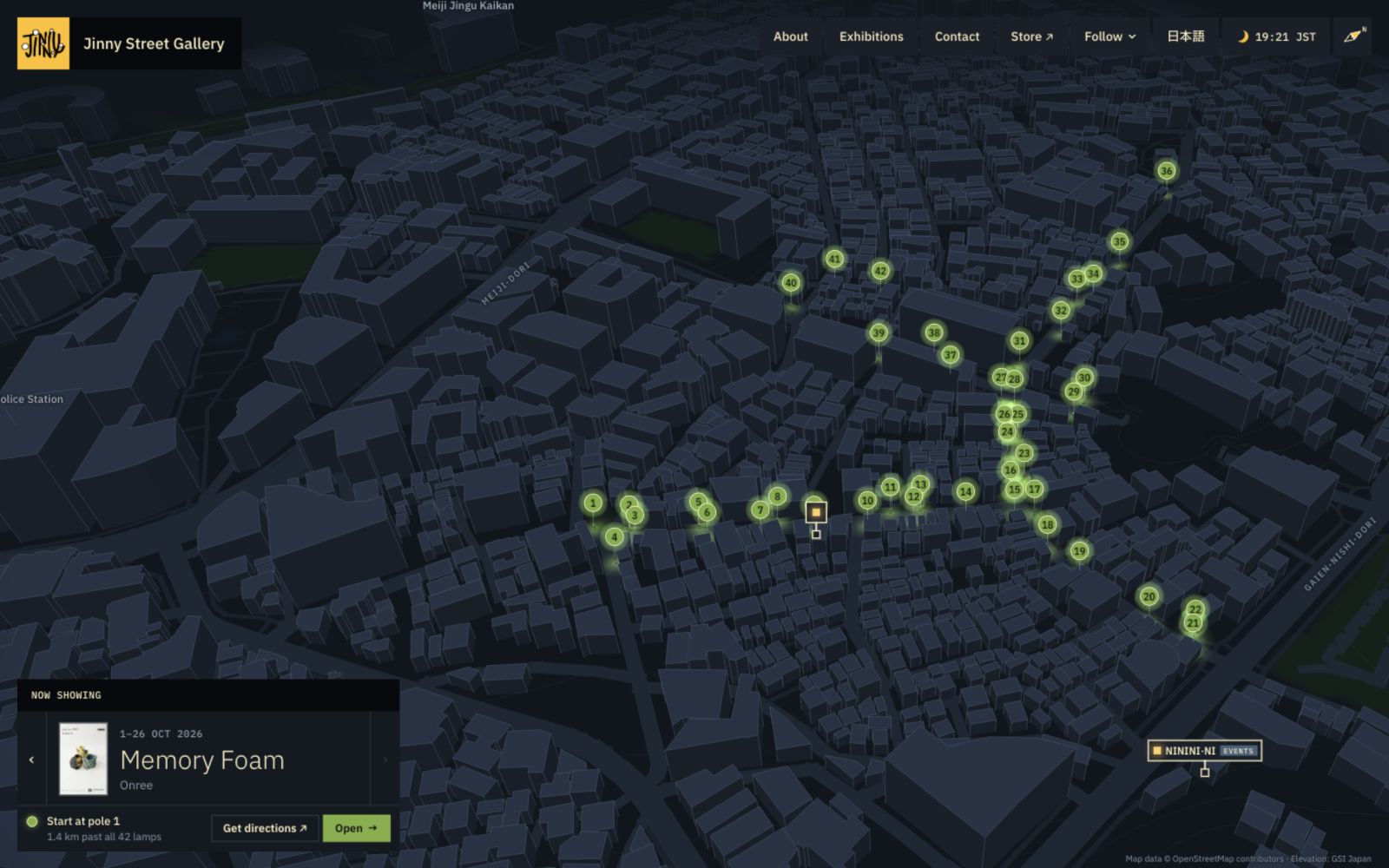
I wanted that interactivity to carry through as much of the website as possible. Browsing older exhibitions, opening photographs, and moving between places should all be enjoyable in themselves. Making the site fun to spend time in was one of the main design goals.
A Home for the Archive
Over the years, we have collected a large archive of exhibition photographs, artist walks, and other material from the life of the gallery. Much of it had no useful place online. Instagram is good at showing what is happening now; it is much less useful for browsing the history of a gallery or finding the material around a particular exhibition.
The new exhibition archive gives each show a lasting place. Posters lead into records that bring together statements, artists, photographs, and events. Where we have photographs of individual streetlamps, those can also be explored through the virtual walk. Photos from artist walks sit with the exhibition they belong to.
I wanted this material to remain findable and connected, with room for the archive to grow as we work through it. An exhibition should still be worth visiting online after it has left the street.
A Tool for Artists
The part I am particularly proud of is the specifications page.
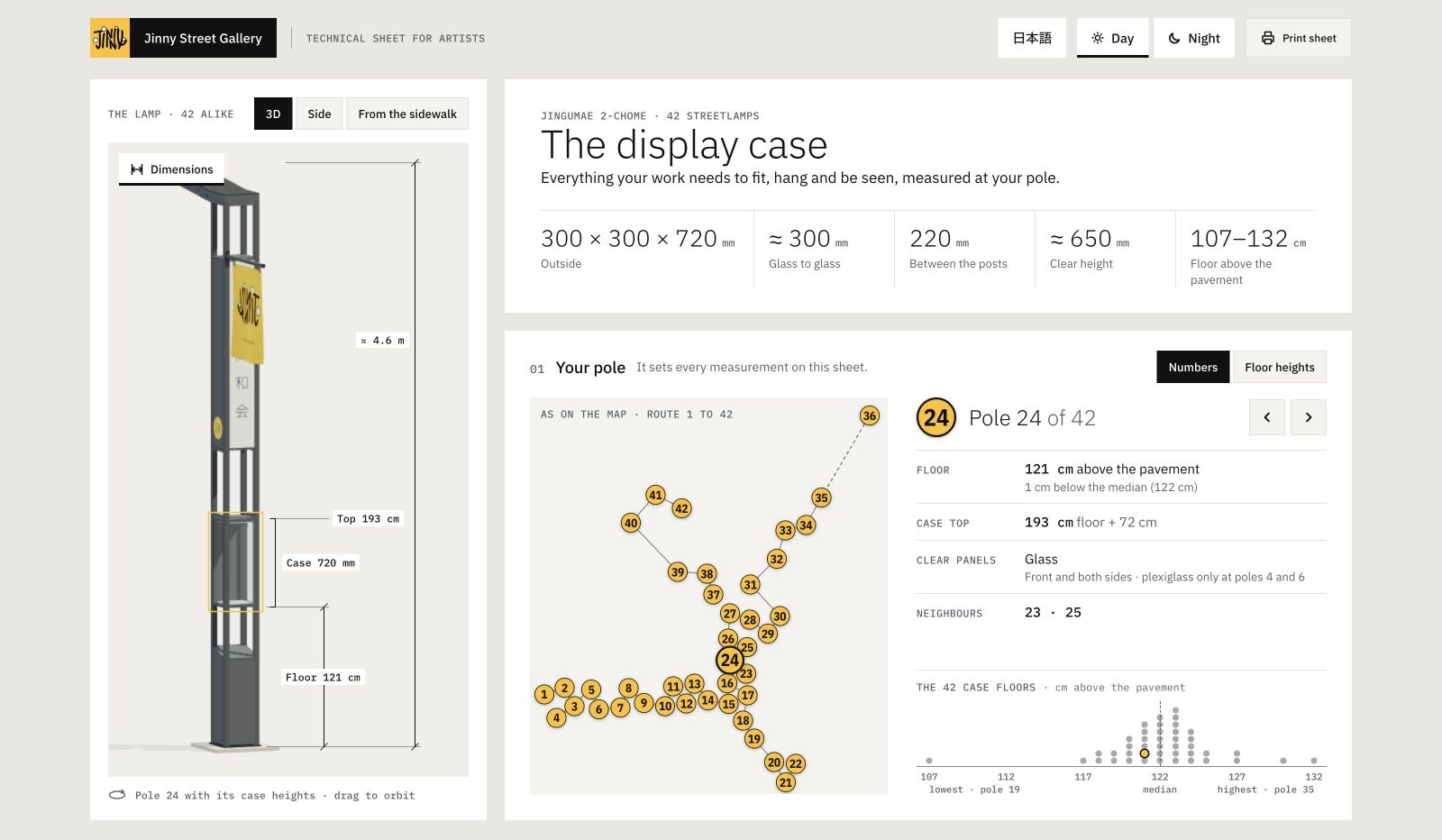
Exhibiting inside a streetlamp is unusual. We have always needed to explain the cases to artists: how much space there is, how work can sit or hang inside, and what someone walking past will actually see. The cases also sit at different heights above the pavement, so the choice of pole matters.
I turned those explanations into an interactive technical sheet. Artists can choose any of the 42 poles, inspect the lamp in 3D, and see the measurements for their particular case, including its height above the pavement.
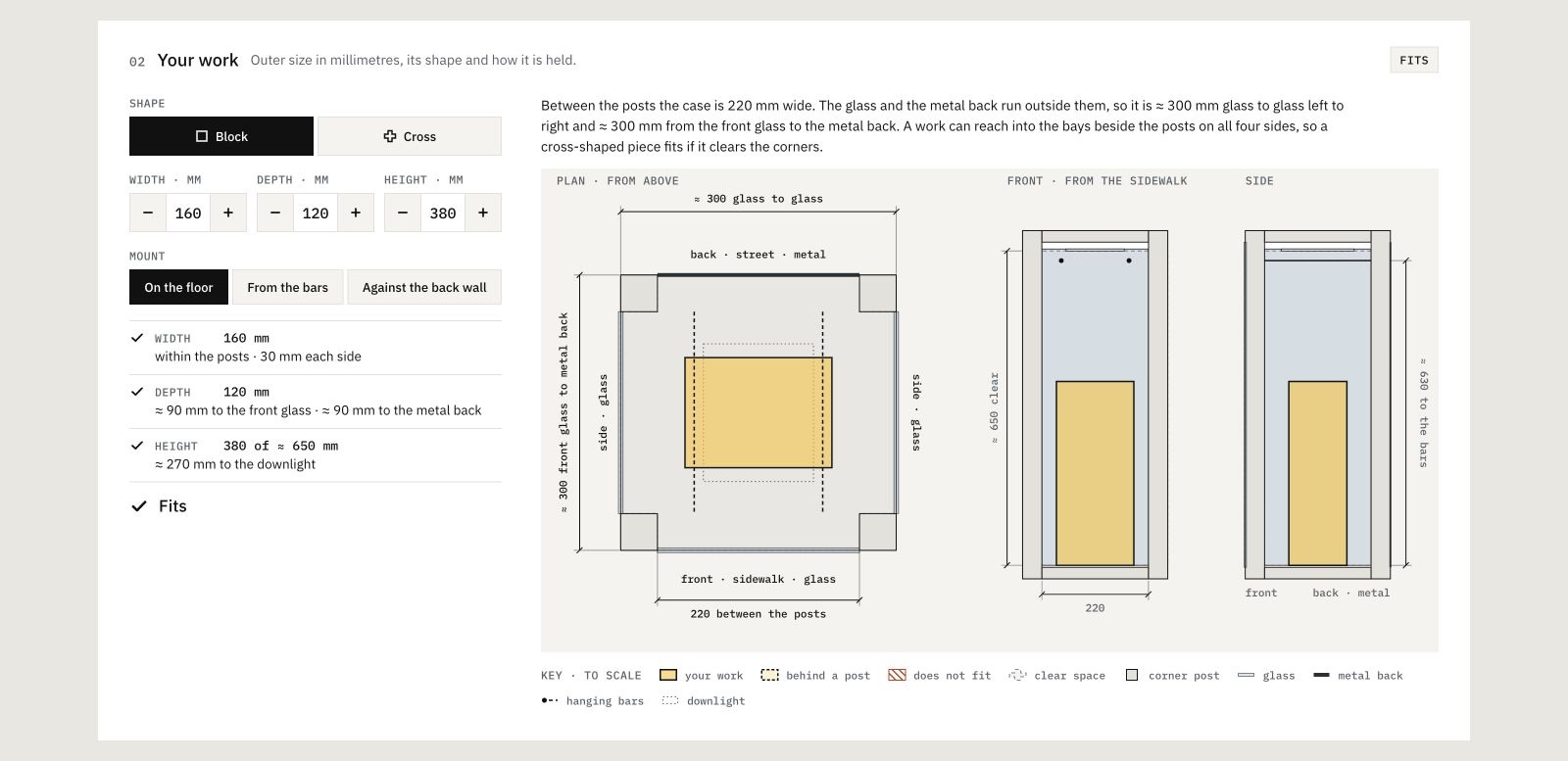
From there, artists can enter the dimensions of their work and check its clearance inside the case. Changing the shape or mounting method updates the clearance checks and the plan, front, and side drawings.
A separate view compares the work with adult, child, and seated eye heights, in daylight or under the lamp at night. The same choices produce an installation card that can be printed or copied.
Approximate measurements are marked, and we still check the actual case with the artist before installation. The aim is to make those conversations easier by giving us something concrete to look at together.